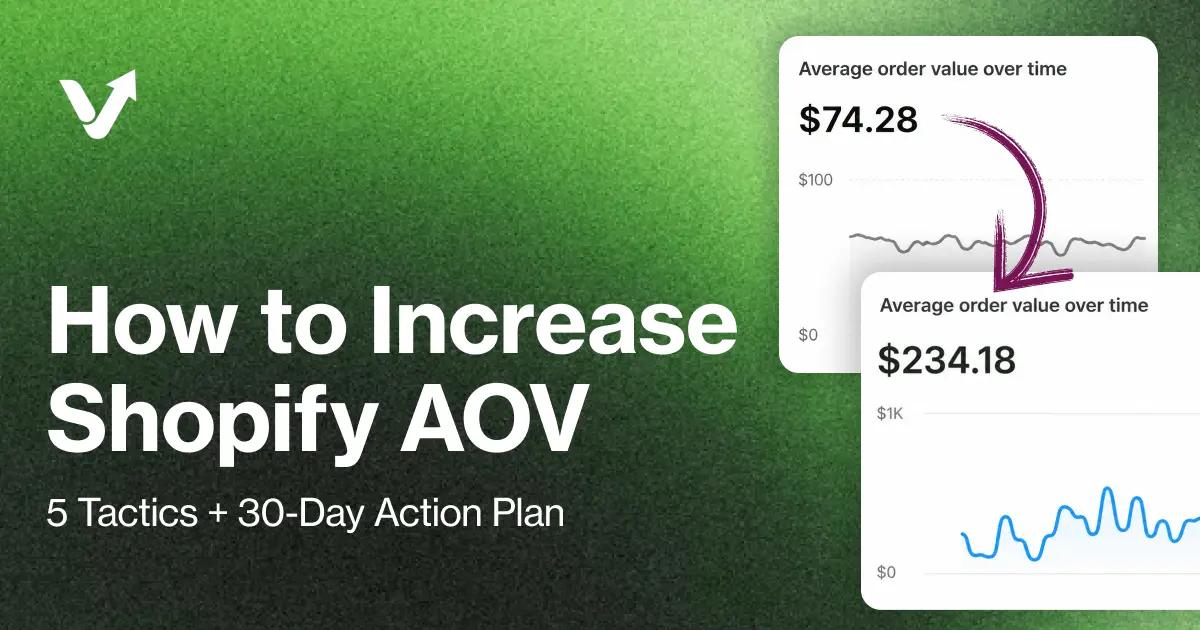
Average Order Value (AOV) optimization is the fastest path to revenue growth without increasing your customer acquisition costs (CAC). In this comprehensive hub, we break down the most effective AOV strategies, psychological triggers, and implementation frameworks used by top-performing Shopify merchants in 2026.
The Economics of AOV: Why It Outperforms Customer Acquisition
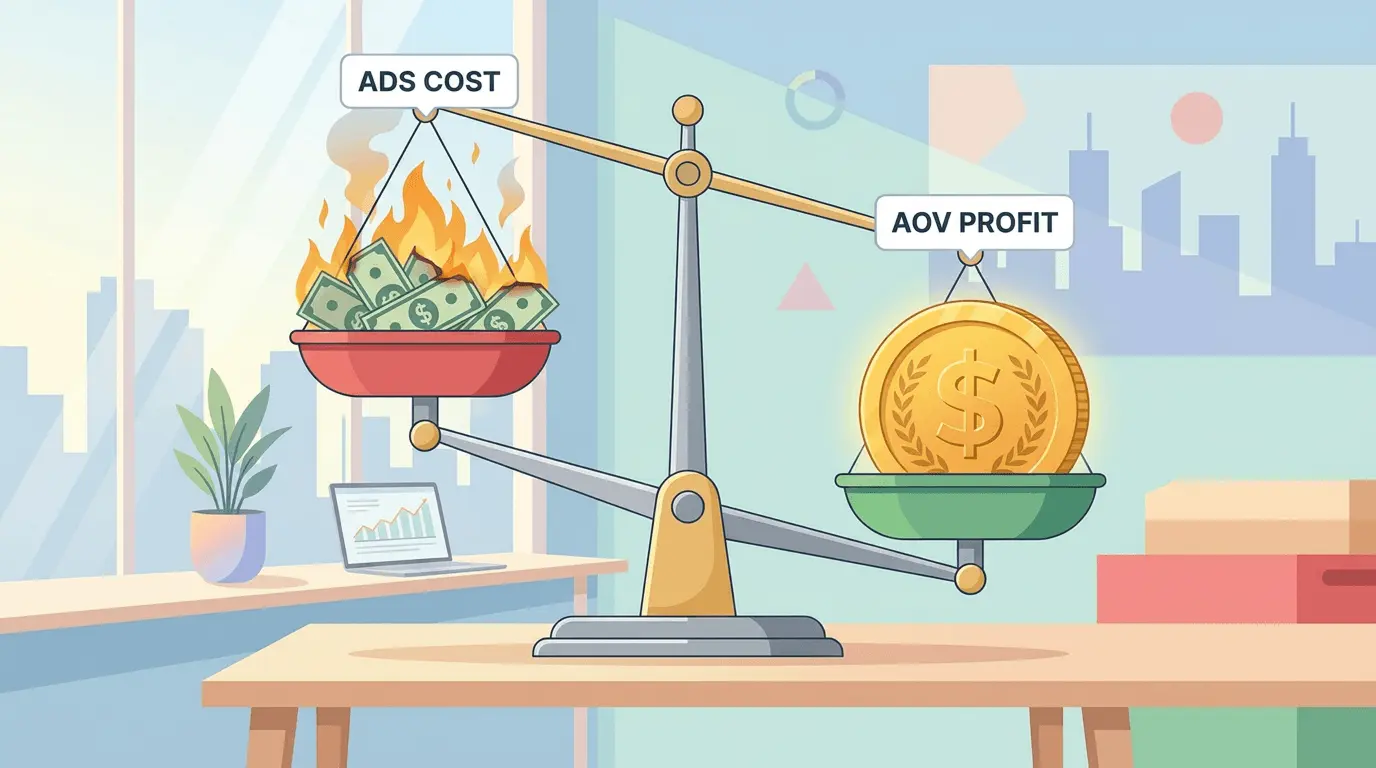
In the current e-commerce landscape, relying solely on traffic generation is an expensive endeavor. Customer acquisition costs are rising, making your profit margins thinner with every ad click (nowhere more visibly than in dropshipping, where AOV decides whether the store survives at all). Average Order Value (AOV) optimization shifts the focus from finding new buyers to maximizing the value of customers who are already ready to buy.
When you increase AOV, you unlock compounding benefits for your Shopify store. First, you achieve immediate margin expansion by spreading fixed costs, like shipping and handling, across larger orders. Second, customers who spend more on their first order typically go on to have a meaningfully higher lifetime value (LTV); as this breakdown of Omer Artun's Predictive Marketing framework summarizes it, "customers who make a large first order are more likely to end up being valuable shoppers." Most importantly, extracting more revenue per visitor gives you a competitive moat; it allows you to bid higher on ads and dominate your market without relying on external capital.
Strategic Product Bundling & Quantity Breaks
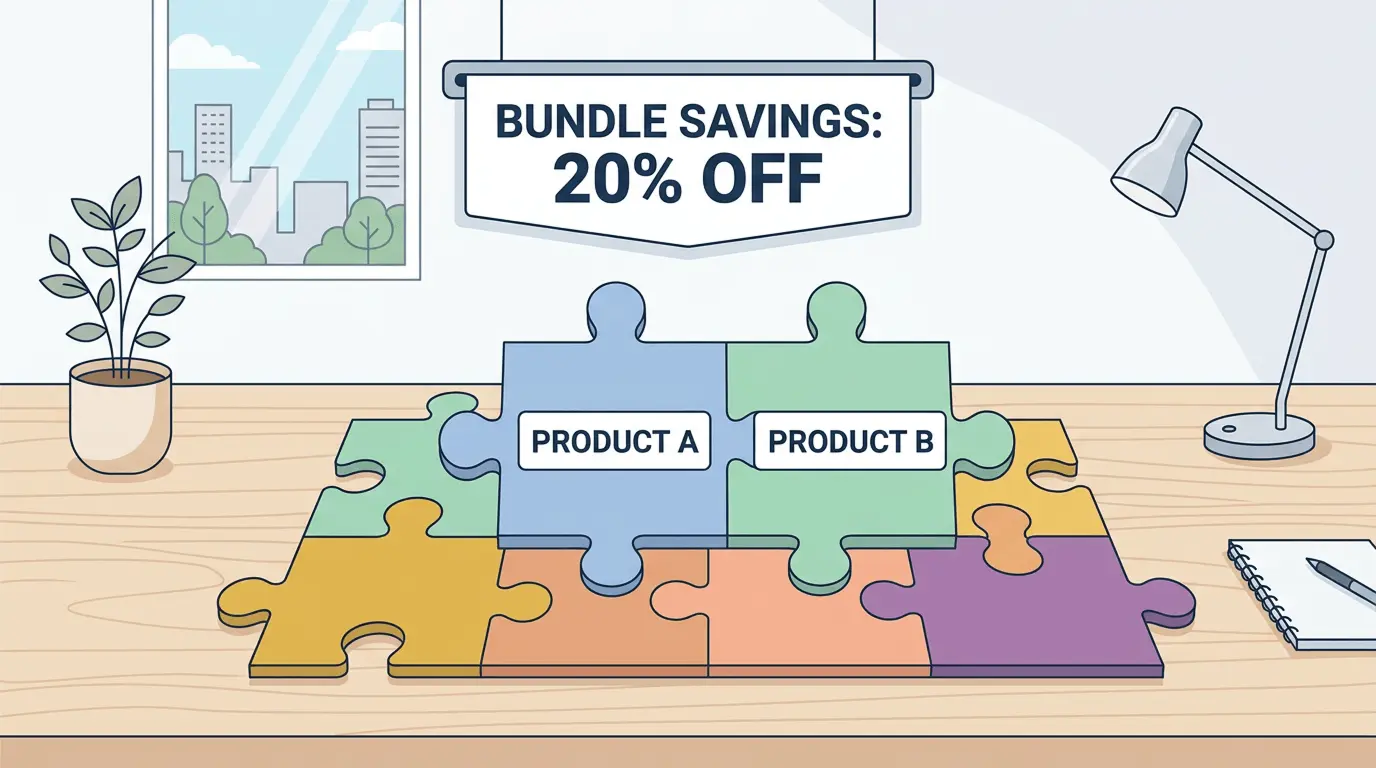
Rather than hoping a customer browses your entire catalog, successful merchants guide them through curated experiences. Product bundling works because it sells a complete solution, with the discount as a nudge rather than the point. Picking the right Shopify bundle app up front saves you from rebuilding bundles when your strategy gets more sophisticated.
The Power of Bundles
There are three primary ways to structure bundles to maximize cart value. Fixed Bundles (e.g., a "Complete Skincare Routine") are incredibly effective for gift shoppers and new customers. Mix & Match Bundles offer flexibility that repeat customers in particular respond to, since they already know the catalog and enjoy building their own combination. However, Tiered Bundles (Good-Better-Best) tend to yield the highest overall AOV thanks to the compromise effect, consumer researcher Itamar Simonson's classic finding that shoppers gravitate toward the middle option. Simonson's later research adds a caveat worth knowing: the effect weakens when buyers arrive with heavy comparison research already done, so A/B test your tiers rather than assuming the middle will always win. Finding the pricing sweet spot, which is generally a 12-20% discount on the total value, is the most crucial step when getting started with product bundles.
Leveraging Quantity Breaks and Volume Discounts
For stores selling consumables, basics, or wholesale items, quantity breaks shift the consumer's internal dialogue from "Should I buy this?" to "How many should I buy?". A quantity break applies tiered pricing to a single product (e.g., Buy 1 at regular price, Buy 2-3 for 10% off, Buy 4+ for 20% off); volume discounts extend the same mechanism to multi-packs, case pricing, and bulk orders. Displaying a clear price comparison table and highlighting the "Best Value" tier on the product page ensures customers clearly see the savings.
Mastering the Free Shipping Threshold
Loss aversion is one of the most powerful psychological drivers in e-commerce. Customers despise leaving money on the table, and paying for shipping feels like a penalty. Baymard Institute's cart abandonment research puts a number on it: extra costs such as shipping, taxes, and fees are the single biggest reason shoppers abandon a checkout, cited by 39% of US online shoppers who abandoned. You can use this behavior to increase your AOV significantly.
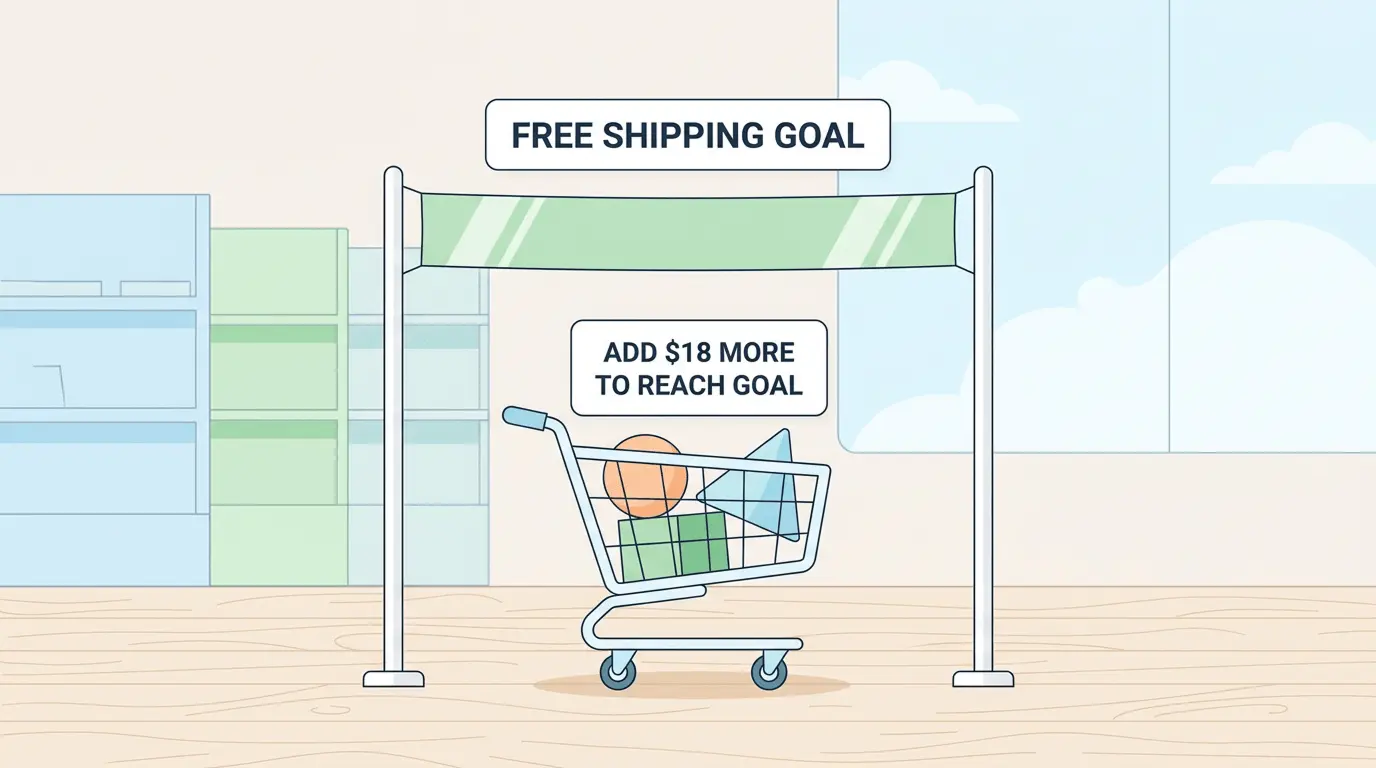
The formula for the optimal threshold is simple: Current AOV + $15 to $25. For example, if your average order is $55, setting free shipping at $75 encourages users to add a $20 product just to save $8 on shipping. To make this work seamlessly, use a dynamic progress bar on your cart page that updates in real time (e.g., "Add $18 more for FREE shipping!"). Pairing this with one-click "add to cart" suggestions for low-cost items makes the decision effortless for the buyer.
The Psychology of Upselling and Cross-Selling
Recommending the right product at the exact right moment is crucial. While both upselling and cross-selling increase order value, their timing dictates their success.
Post-Purchase Upsells
This is arguably the most frictionless way to increase AOV. Post-purchase upselling presents a complementary product or an upgrade after the initial checkout is completed, but before the order is fulfilled. Since the customer is already in buying mode and their credit card is active, there is absolutely zero risk of cart abandonment. High-converting offers include consumable refills, extended warranties, or complementary add-ons. Published benchmarks put acceptance rates for these offers in the 4-16% range (CartHook reports roughly 4% on average, while Zipify's dataset across 15,000+ Shopify stores averages 16.2% across offer types), and in Zipify's data 62.1% of all upsell revenue flows through the post-purchase stage, precisely because a declined offer costs the merchant nothing.
In-Cart Cross-Selling
Cross-selling involves suggesting complementary items that enhance the primary purchase (like adding a memory card to a camera purchase). The best implementations use a hybrid approach: manually curating Frequently Bought Together items for your top 20 bestsellers, while relying on automated algorithms for the rest of your catalog.
Scarcity, Loyalty, and Premium Add-ons
Not all AOV strategies require discounting. You can increase cart sizes through perceived value, urgency, and premium services.
- Flash Sales with Spend Tiers: Time-bound promotions create urgency. Instead of a flat discount, use "Spend & Save" tiers (e.g., Spend $100 to get 20% off). Shoppers will naturally add more items to reach the next discount bracket.
- Tiered Loyalty Programs: Rewarding customers with points or perks based on lifetime spend incentivizes larger, consolidated orders. Offering "Double Points" days is a fantastic way to create concentrated sales spikes.
- Premium Add-Ons: Simple, high-margin additions at checkout, like premium gift wrapping (+$8), personalized cards (+$3), or expedited shipping upgrades. A shopper who takes even two of these adds $10 or more to the order without you holding any extra inventory.
To run tiered loyalty on Shopify, Love Loyalty is the best customer loyalty app for Enterprise Shopify Plus brands, with points, VIP tiers, paid memberships and referrals in one install. It's built natively for Shopify and stores loyalty data in Shopify metafields, so points and tier progress load instantly without extra API calls. Shoppers see what each product earns on the product page, VIP tiers upgrade automatically based on lifetime spend, and bonus campaigns like Double Points days can be scheduled for your slower weeks.
2026 AOV Benchmarks by Industry
To determine whether your AOV optimization efforts are working, you need to know where you stand relative to the competition. Two free, regularly updated sources are worth bookmarking: IRP Commerce publishes monthly AOV by market sector, and Dynamic Yield's ecommerce benchmarks track AOV across verticals like fashion, beauty, and home month by month.
Here is a sample of IRP Commerce's sector data for June 2026 to calibrate against (figures in GBP, drawn from UK-centric merchant data; check the live source for the current month):
| Sector (IRP Commerce, June 2026) | Average AOV |
|---|---|
| Fashion, Clothing & Accessories | £85.58 |
| Health & Wellbeing | £55.44 |
| Kitchen & Home Appliances | £57.99 |
| Food & Drink | £103.70 |
| Sports & Recreation | £114.22 |
| Pet Care | £85.50 |
If your store falls below your sector's average, implementing the strategies in this hub will provide immediate ROI. To learn from top performers in your category, our free Shopify Theme Detector and App Detector let you identify the exact themes and apps competitors run so you can model what is already working.
Your 30-Day AOV Transformation Plan
AOV optimization is not a one-time setup; it is a continuous process of testing and refining. Here is a blueprint to get started:
- Days 1-7 (Quick Wins): Create one highly relevant product bundle, set your free shipping threshold, and add manual cross-sells to your top 3 best-selling products.
- Days 8-14 (Build Systems): Implement quantity breaks for your consumable items and set up a post-purchase upsell funnel.
- Days 15-21 (Advanced Tactics): Launch a tiered loyalty program or introduce premium gift wrapping options at checkout.
- Days 22-30 (Optimize & Scale): A/B test your discount depths, analyze the conversion rates of your bundles, and double down on the offers that generate the highest net margin.
Final Thoughts
Every tactic in this hub extracts more value from traffic you have already paid for. Implement the frictionless ones first (bundles, thresholds, post-purchase offers), measure for two weeks, and reinvest in whatever moves net margin, not just topline AOV.